
- Sightseeing
- Yahya Mubaideen
The 7 Wonders of the World: Why Petra Captivates Most above the Rest
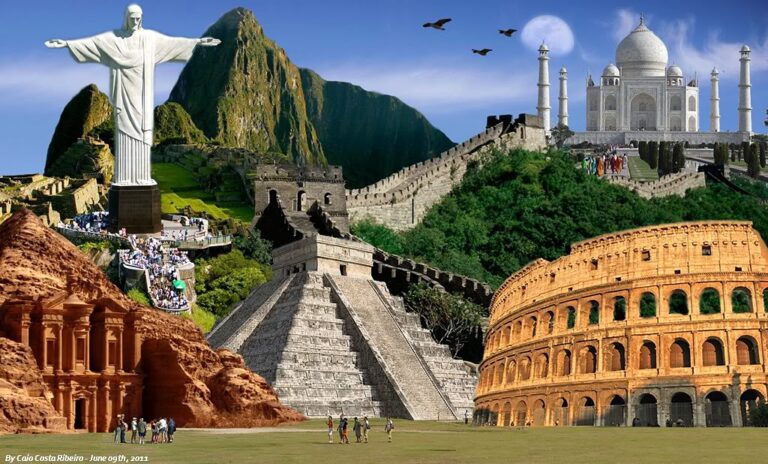
When the New 7 Wonders of the World were announced in 2007 after a global vote involving more than 100 million people, the list reshaped how travelers think about must-see destinations. From the misty peaks of Machu Picchu to the colossal stones of the Great Wall of China, these seven sites represent the pinnacle of human ambition. And right at the heart of this list sits one of the most amazing places on earth: Petra, the Rose-Red City of Jordan.
If you’re planning a bucket-list trip and trying to decide which wonder deserves your time first, this guide breaks down all seven, and why Petra continues to leave visitors speechless year after year.
What Are the New 7 Wonders of the World?
If you didn’t already know, the idea came from the original Seven Wonders of the Ancient World (think the Hanging Gardens of Babylon, the Temple of Artemis…), those lists were defined more than 2,000 years ago. Of which only the pyramids still stand. To celebrate a new era of global heritage, the Swiss-based New7Wonders Foundation organized a worldwide poll, and the following seven sites earned the title:
- Petra in Jordan
- The Great Wall of China
- Christ the Redeemer in Brazil
- Machu Picchu in Peru
- Chichén Itzá in Mexico
- The Roman Colosseum in Italy
- The Taj Mahal in India

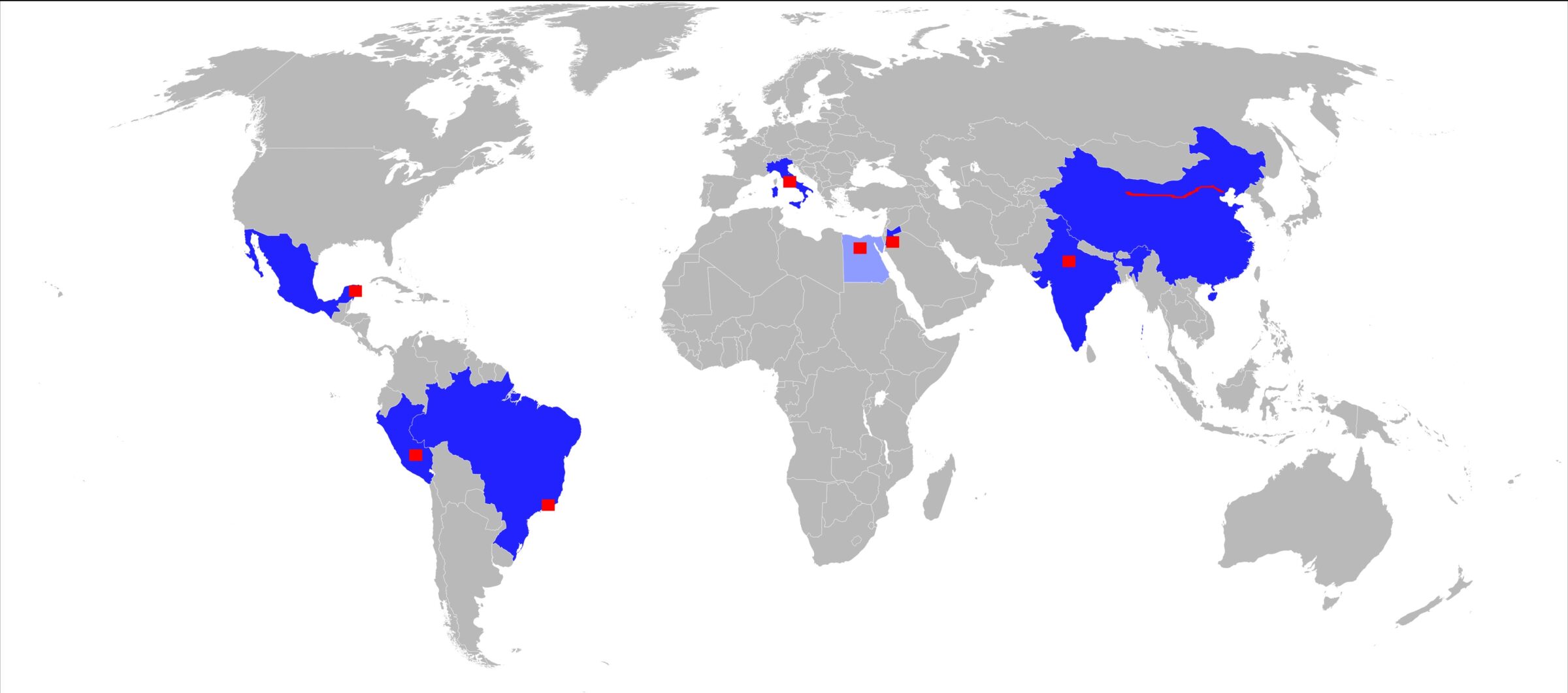
The Great Pyramid of Giza in Egypt was later named an honorary eighth wonder, in recognition of its status as the only surviving site from the Seven Wonders of the Ancient World.
Each site tells a story about a civilization that pushed the limits of what was possible with the tools of its time. Or simply the weight it carries as an icon of human ingenuity. Nonetheless, few do it as dramatically as Petra.
A Quick Outline of the Seven Wonders
The Great Wall of China stretches more than 13,000 miles across northern China, built over centuries to protect Chinese empires from invasion. Walking even a small section is a humbling reminder of human persistence.
Christ the Redeemer stands 98 feet tall on Mount Corcovado above Rio de Janeiro, completed in 1931. It’s the youngest wonder on the list and arguably the most photographed statue in the world.
Machu Picchu is the 15th-century Incan citadel hidden in the Peruvian Andes, “rediscovered” by the outside world in 1911. Its terraces and temples sit at nearly 8,000 feet above sea level.
Chichén Itzá was the political and economic center of the Mayan civilization in the Yucatán Peninsula. Its famous El Castillo pyramid is engineered so that twice a year, the sun creates a shadow that looks like a serpent slithering down the steps.
The Colosseum in Rome held up to 80,000 spectators for gladiator battles and public spectacles. Built in the 1st century AD, it still defines the skyline of central Rome.
The Taj Mahal is a white marble mausoleum in Agra, India, commissioned by Emperor Shah Jahan in 1632 in memory of his wife Mumtaz Mahal. It is widely considered the most beautiful building ever constructed.
And then there is Petra.
Why Petra Outshines Them All
Petra is neither a single monument, nor a series of buildings with the same architectural design
It is more of an entire ancient city carved into rose-red sandstone cliffs, with multiple inspirations from other cultures of the same period, founded by the Nabataeans (312 BCE – 106 CE), a sophisticated Arab civilization that controlled the spice and incense trade routes between Arabia, Egypt, and the Mediterranean.
The approach through the Siq
While other wonders reveal themselves all at once. Petra makes you earn it. Visitors walk roughly one kilometer through the Siq, a narrow, winding canyon with walls towering up to 80 meters above. The path twists and narrows until, suddenly, through a sliver of light, the Treasury (Al-Khazneh) appears; a 40-meter-tall facade carved directly into the cliff. One of the most recognizable travel images in the world. Yet no photograph prepares you for that first moment of the most iconic (but not the largest) of what Petra has in store for you to discover. A moment many travelers describe as unforgettable.
A city of old that rivals modern cities in size
Beyond the Treasury, Petra opens up into a vast archaeological site that takes days, not hours, to explore. There’s the Street of Facades, the Royal Tombs, a Roman-style theater carved into rock that once seated 8,500 people, and the famous Monastery (Ad Deir) -even larger than the Treasury, reached by climbing 800 to 900 stone steps.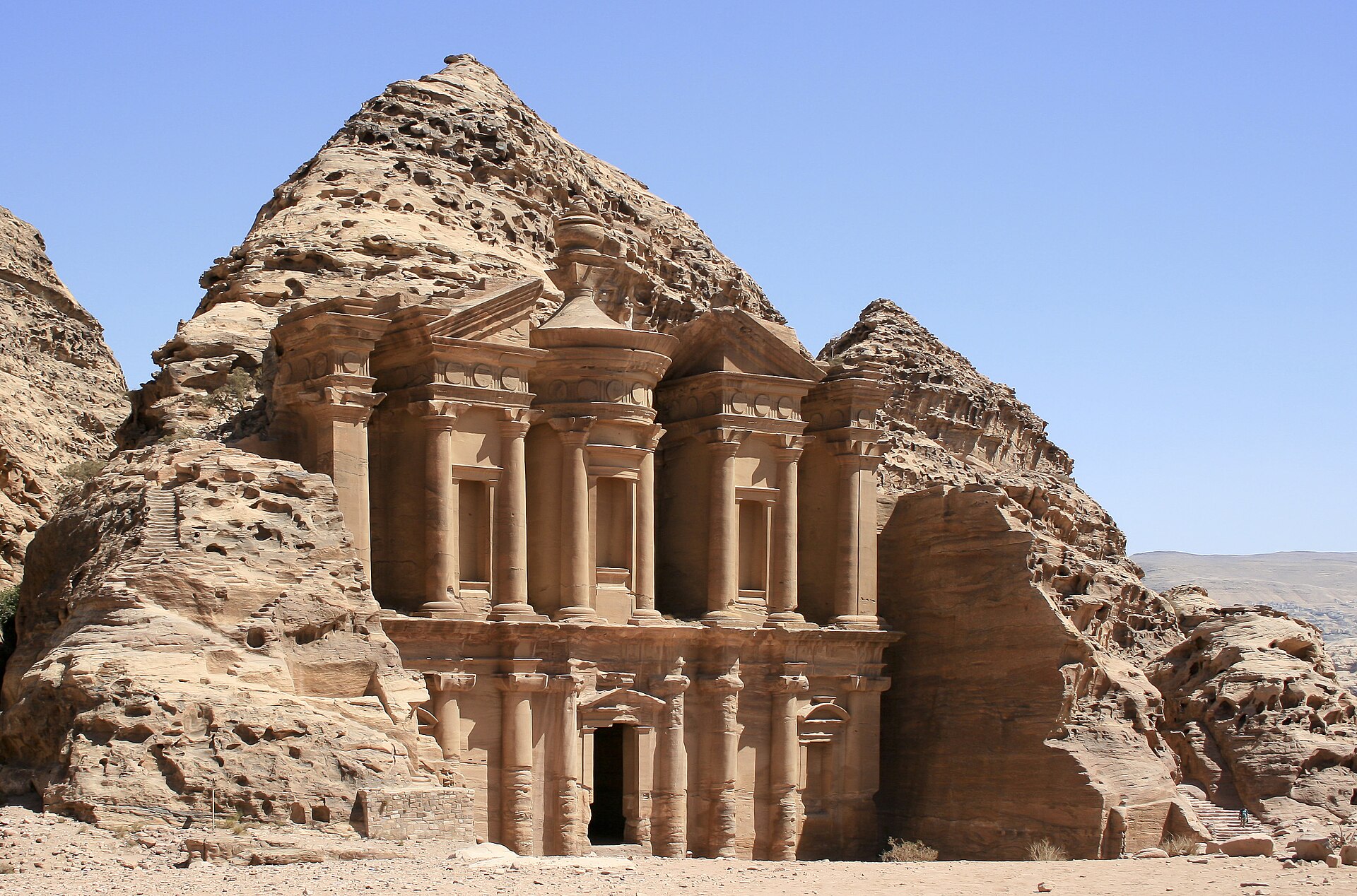
An example of sheer will
The Nabataeans developed advanced water management systems that allowed the city to survive in an arid region. Their engineering achievements continue to impress archaeologists and historians today.
History you can relive
Unlike other wonders that are somewhat void of daily life, Petra invites you in. While you walk inside tombs, run your hand along 2,000-year-old carvings, and hike trails that Bedouin families have used for generations. You can easily imagine how living was in its past.
All seven World Wonders are extraordinary. However Petra is the rare site that combines mystery, scale, adventure, timeless beauty, artistry, and a sense of genuine discovery. You don’t just look at it. You walk through it, climb it, and lose yourself in it!
Most visitors give Petra one full day. Though to truly experience it, assign two or three days. Pair your visit with the mesmerizing desert landscapes of Wadi Rum and a float in the Dead Sea, and you’ll have one of the greatest trips of your life.